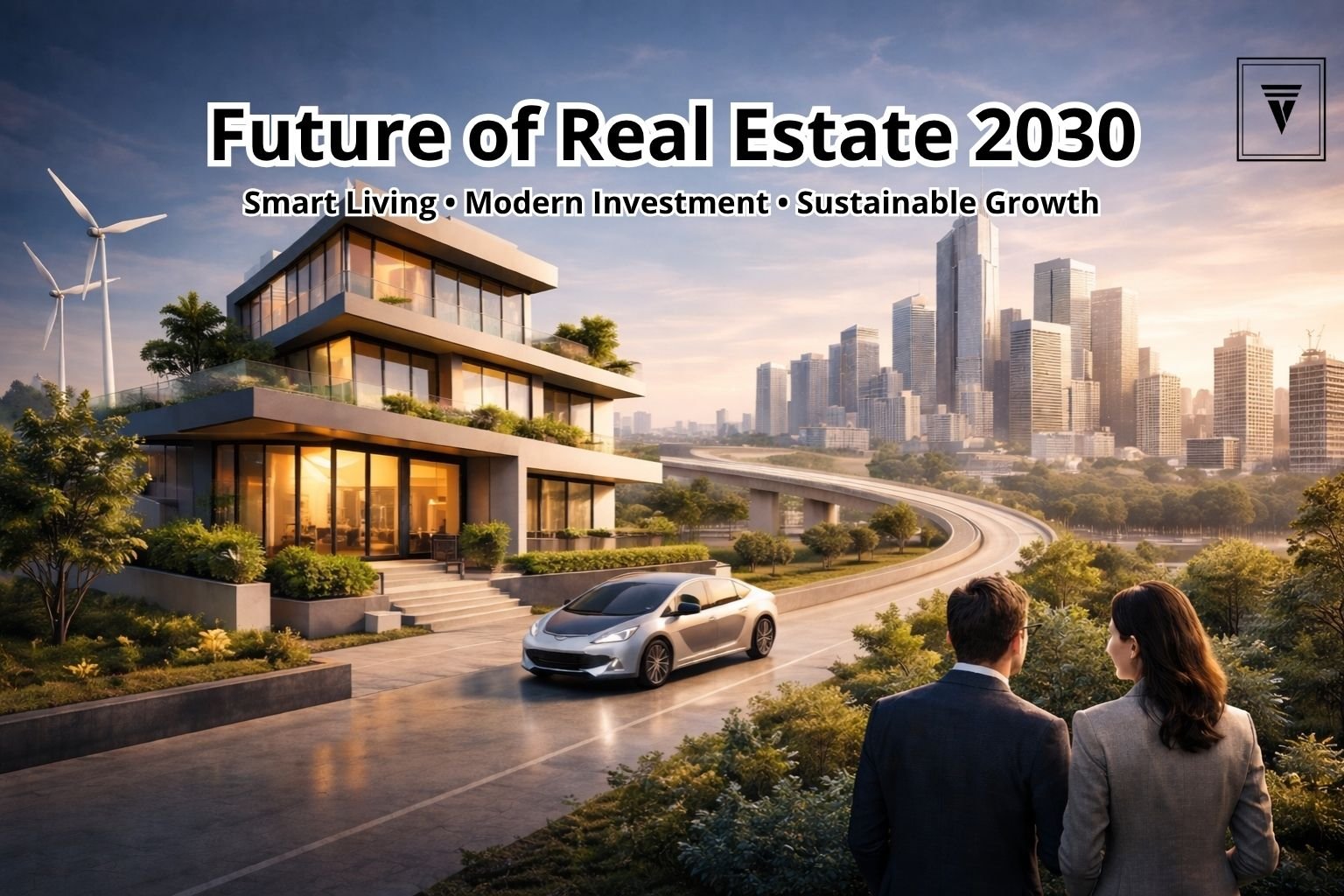
The Future of Real Estate by 2030: Trends, Technology & Investment Opportunities
The real estate industry is no longer just about land and buildings—it has evolved into a sector driven by lifestyle, technology, innovation, and long-term vision. As we move closer to 2030, the pace of transformation is accelerating rapidly, and those who understand these emerging trends early will have a significant advantage in the market. At Vintage Vista, the focus has always been on identifying future-ready opportunities and helping investors and homebuyers stay ahead in an ever-evolving real estate landscape.
From smart homes and AI-driven property management to digital transactions, sustainable developments, and changing buyer expectations, the next few years are expected to completely redefine how the real estate sector operates globally—especially in fast-growing markets like India. Modern buyers are increasingly prioritizing technology-enabled living, eco-friendly communities, better connectivity, and long-term investment value, pushing developers and real estate brands to innovate faster than ever before.
Smart Living: The Rise of Intelligent Homes and Cities
By 2030, the concept of a “home” will be very different from what it is today. Smart homes equipped with automation systems will become the new normal rather than a premium feature. Lighting, temperature, security, and even appliances will be controlled through mobile apps or voice assistants.
But it doesn’t stop at individual homes. Entire residential communities are evolving into smart ecosystems designed for modern living. Imagine societies where energy consumption is optimized through intelligent systems, waste management becomes more efficient through automated processes, and security infrastructure is strengthened by AI-driven technology. These smart developments not only enhance convenience, sustainability, and overall quality of life, but also play a major role in increasing long-term property appreciation, investment potential, and future real estate value.
Forward-thinking platforms like Vintage Vista are already aligning with these trends, ensuring that buyers invest in properties that are built for the future.
Digital Transformation: How Property Buying Will Change
One of the biggest transformations by 2030 will be how properties are bought and sold. The traditional process involving multiple site visits, lengthy paperwork, and various intermediaries is gradually evolving with modern digital real estate solutions.
Digital tools such as virtual tours, 3D walkthroughs, and AI-based recommendations are simplifying the buying journey. A buyer sitting in one city will be able to explore and finalize a property in another without ever physically visiting it.
Blockchain technology is also expected to play a major role. It can bring transparency, reduce fraud, and speed up transactions by eliminating unnecessary intermediaries.
For companies like Vintage Vista, embracing digital transformation is not just an option—it’s a necessity to provide seamless and trustworthy experiences to modern buyers.
Green Real Estate: Sustainability Will Lead the Market
Environmental concerns are becoming increasingly important for both buyers and developers. By 2030, sustainability will not just be a trend—it will be a core requirement.
Green buildings will dominate the market, featuring:
- Energy-efficient designs
- Solar power systems
- Rainwater harvesting
- Waste recycling mechanisms
These features not only help the environment but also reduce long-term costs for homeowners. As a result, eco-friendly properties are likely to command higher demand and better resale value.
Vintage Vista recognizes that sustainable development is the future and continues to promote projects that align with environmentally responsible practices.
Flexible Spaces: The Boom of Co-Living and Co-Working
The way people live and work has changed dramatically in recent years, and this trend will only grow stronger by 2030.
Remote work and freelancing have increased the demand for flexible living arrangements. Co-living spaces are becoming popular among young professionals due to affordability and community benefits.
Similarly, co-working spaces are replacing traditional offices. Businesses are now looking for flexible, cost-effective work environments instead of long-term leases.
This shift is giving rise to mixed-use developments—projects that combine residential, commercial, and recreational spaces in one location. These integrated spaces offer convenience and a better lifestyle, making them highly attractive for future buyers.
Data-Driven Investing: Smarter Decisions, Higher Returns
Gone are the days when real estate decisions were based purely on instinct. By 2030, data will play a central role in investment strategies.
Advanced analytics will provide insights into:
- Market trends
- Future price appreciation
- Rental yields
- Infrastructure development
Buyers and investors will have access to detailed information, enabling them to make more informed and confident decisions.
At Vintage Vista, data-driven insights are already a key part of the decision-making process, helping clients identify high-potential investment opportunities.
Affordable Housing: Expanding Opportunities for All
As urban populations continue to rise, the demand for affordable housing will increase significantly. Governments and developers will focus more on creating budget-friendly housing solutions.
By 2030, we can expect:
- More government incentives for affordable housing
- Faster project approvals
- Innovative construction technologies to reduce costs
This segment will open up opportunities for first-time buyers and investors looking for stable, long-term returns.
Emerging Locations: The Next Real Estate Hotspots
Urban expansion is another major trend shaping the future of real estate. As cities become more crowded, development will move towards suburban and peripheral areas.
Improved infrastructure—such as metro connectivity, highways, and expressways—will make these areas more accessible and desirable.
For investors, this means one thing: early investment in emerging corridors can lead to significant appreciation over time.
Vintage Vista often emphasizes the importance of identifying these growth corridors before they become mainstream, allowing investors to maximize returns.
Evolving Buyer Behavior: What Will Matter Most
The modern buyer is more informed and cautious than ever before. By 2030, this trend will become even stronger.
Buyers will focus on:
- Long-term value rather than short-term gains
- Transparent transactions
- Quality construction and trusted developers
- Lifestyle and community living
There will also be a clear preference for ready-to-move-in properties, as buyers seek to minimize risk and avoid delays.
AI in Real Estate: Automation and Intelligence
Artificial Intelligence is set to revolutionize real estate operations. From customer support to property management, AI will streamline multiple aspects of the industry.
Some key applications include:
- AI-powered property recommendations
- Chatbots for instant customer support
- Predictive analytics for investment decisions
- Automated maintenance systems
These advancements will improve efficiency, reduce costs, and enhance the overall customer experience.
Companies like Vintage Vista are already exploring AI-driven solutions to stay ahead in this competitive landscape.
Rental Market Growth: A Shift in Lifestyle Choices
The rental market will expand significantly by 2030. With increased job mobility and changing lifestyle preferences, many people are choosing to rent instead of buy.
This shift will lead to:
- Growth of professionally managed rental housing
- Entry of institutional investors into the rental market
- Development of build-to-rent projects
For investors, rental properties will offer a steady source of passive income, especially in urban and IT-driven cities.
Transparency & Regulations: A More Secure Market
The real estate sector is becoming more organized and transparent, thanks to regulatory frameworks. By 2030, regulations will become even stricter, ensuring better accountability and protection for buyers.
This will:
- Increase trust in the market
- Reduce fraudulent practices
- Encourage more investments
Transparency will become a key factor influencing buyer decisions, making it essential for developers to maintain credibility.
Conclusion: Preparing for a Smarter Real Estate Future
The future of real estate by 2030 is not just about growth—it’s about transformation. Technology, sustainability, and changing lifestyles will redefine the industry in ways we are only beginning to understand.
For investors and buyers, this evolution presents immense opportunities. The key is to stay informed, think long-term, and adapt to emerging trends.
At Vintage Vista, the goal is to guide clients through this changing landscape with clarity and confidence. As the market evolves, those who embrace innovation and make informed decisions today will be the ones who benefit the most tomorrow.
The real estate market of 2030 will reward vision, strategy, and adaptability—and the time to prepare for that future is now.
.png)
.png)
.png)
.png)
.png)
.png)
.png)
.png)
.png)
.png)
.png)
.png)
.png)
.png)
.png)
.png)
.png)
.png)
.png)
.png)
.png)
.png)
.png)
.png)
.png)
.png)
.png)
.png)
.png)
.png)
